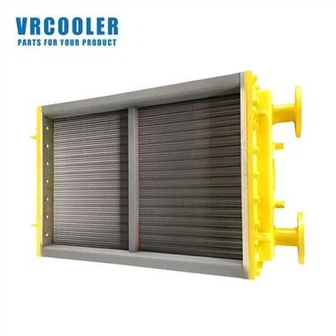
Plate Fin Type Radiator Core For After-Cooler And Jacket Water
Plate Fin Type Radiator Core For After-Cooler And Jacket Water
Heat Dissipation: The radiator core transfers heat from the coolant (or air) to the surrounding environment, effectively cooling the fluid within the system.
Temperature Regulation: Maintains optimal operating temperatures for engines and other machinery, preventing overheating and ensuring efficient performance.
After-Cooling: Cools compressed air from air compressors or turbochargers before it enters the engine or other processes, enhancing efficiency and performance.
Material: Typically made from aluminum or copper for effective heat transfer and lightweight construction.
Crossflow: Fluid flows horizontally while air flows vertically, enhancing heat transfer.
Downflow: Fluid flows vertically through the core, often used in compact designs.
Fin Design: Fins are used to increase the surface area for heat transfer. The design and spacing of the fins can significantly impact efficiency.
Size and Capacity: The core must be sized appropriately to handle the expected heat load and fluid flow rates.
After-Coolers: Used in compressed air systems to cool air after compression. This reduces moisture and improves overall efficiency before the air enters the engine or pneumatic tools.
Jacket Water Systems: In engines, the radiator core cools the jacket water, which absorbs heat from the engine block and cylinder heads, helping to maintain safe operating temperatures.
Industrial Equipment: Commonly found in heavy machinery, generators, and vehicles to ensure optimal operating conditions and prevent overheating.